Results of First Comprehensive Assessment of Pediatric Capabilities of EMS and Fire-Rescue Agencies Published
- Published February 17, 2026
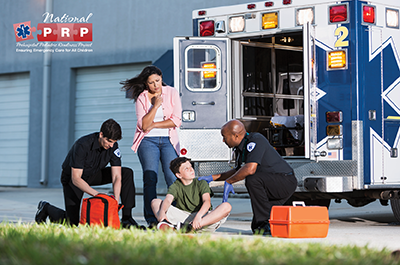
New Study Describes Nationwide Baseline of Prehospital Pediatric Readiness
A new national study, published today in Annals of Emergency Medicine, provides the first comprehensive understanding of pediatric capabilities of emergency medical services (EMS) and fire-rescue agencies across the United States. The results, which reflect the participation of 7,000 agencies, indicate strengths and opportunities to improve prehospital care for the 3 million children who seek it annually.
The assessment was developed and conducted through the National Prehospital Pediatric Readiness Project (PPRP), an initiative of the Emergency Medical Services for Children (EMSC) Program—part of the Department of Health and Human Services’ Health Resources and Services Administration—in collaboration with leading prehospital and emergency care professional organizations. Respondents answered questions across eight categories of readiness, ranging from equipment and supplies to policies, procedures, and protocols.
“Children represent a small percentage of EMS calls, but when emergencies happen, readiness makes all the difference,” said Kathleen Adelgais, MD, MPH, lead author, co-director of the PPRP, and an EMS and emergency physician at Children’s Hospital Colorado. “This assessment and its results show a strong national commitment to kids within the EMS community—and a clear path to even better care for children.”
Across participating agencies, the median Pediatric Readiness score was 66 out of 100, indicating a strong baseline to build on. Agencies that completed the survey received a customized gap analysis report with feedback on areas for improvement. The report also included individualized benchmarking information, comparing the agency’s score to all participants and agencies with similar pediatric volume.
Key Findings
- Participation: 6,989 out of 15,293 EMS and fire-rescue agencies (46%) responded, representing over 2 million pediatric encounters per year.
- Licensure level: The majority of respondents (70%) were advanced life support (ALS).
- Agency characteristics: More than half (58%) were fire-based agencies. Over 40% of agencies include volunteer providers in their workforce. Nearly 30% serve rural and remote communities.
- PECC Impact: Fewer than half of agencies (38%) report having a pediatric emergency care coordinator (PECC)—someone responsible for overseeing pediatric training and care processes—yet the presence of a PECC is associated with consistently higher scores across every category measured, even in low-resourced, low-volume settings.
- Call Volume: Agencies that care for more children annually tend to have higher readiness scores, underscoring the need for repeat practice and advanced preparation, given pediatric call volume is not modifiable.
- Progress Achieved: Most agencies reported having the nationally recommended pediatric equipment and supplies, reflecting years of efforts driven by EMS and emergency care leaders and the EMSC Program.
The Importance of PECCs
Researchers note that while scope of practice and regulatory requirements vary across licensure levels and states, Pediatric Readiness is intended to be achievable by any agency, regardless of size or resources. They emphasize that designating a PECC is an ideal first step toward improvement.
“Every EMS agency—whether you are rural or urban, volunteer or paid, third service, fire, hospital-based, or private, and whether you see one kid a month or one kid a day—should be ready for children,” said Christopher Way, president of the National Association of Emergency Medical Technicians (NAEMT), a collaborating organization of the PPRP. “Appointing a PECC is the single-most important thing every agency can do to improve care for kids.”
Agencies are encouraged to access PPRP’s free tools and resources to support improvements at pediatricreadiness.org. The assessment will reopen in the future for agencies' internal quality improvement efforts.
Next Steps and Future Research
The national findings are already guiding the next phase of the PPRP, including the development of new resources to address common gaps, like learning modules for PECCs. Future research will explore strategies to improve readiness and how readiness impacts clinical outcomes. Parallel work in emergency departments has found an association between high readiness and the potential for up to 76% lower mortality risk in children.
“Thank you to the thousands of EMS clinicians who demonstrated their commitment to children by participating in this assessment,” said Douglas F. Kupas, MD, NRP, FAEMS, president of the National Association of EMS Physicians, also part of the PPRP. “Every step forward matters as we work together to provide children with even better care. The PPRP, the EMSC Program, and all of its collaborators are here to support you along the way.”
To learn more about the results and what they mean for EMS, join a webinar on Feb. 26 co-hosted by NAEMT and the EMSC Program. The webinar is free, open to all, and approved for 1 hour of CAPCE continuing education credit.
About the Emergency Medical Services for Children (EMSC) Program
The National Prehospital Pediatric Readiness Project is funded through the federal Emergency Medical Services for Children (EMSC) Program, part of the U.S. Department of Health and Human Services. The EMSC Program is the only federal program dedicated to ensuring high-quality care across the emergency continuum for our nation’s most precious—and vulnerable—patients: children. Learn more at pediatricreadiness.org.
The Health Resources and Services Administration (HRSA), Department of Health and Human Services (HHS) provided financial support for this Prehospital Pediatric Readiness Project. The EMSC Innovation and Improvement Center award provided 12% of total costs and totaled $2.5M; and the EMSC Data Center award provided 20% of the total cost and totaled $3.2M. The contents are those of the author. They may not reflect the policies of HRSA, HHS, or the U.S. Government.