
A Small Hospital Making a National Impact: Nemaha County Hospital’s Pediatric Readiness Story
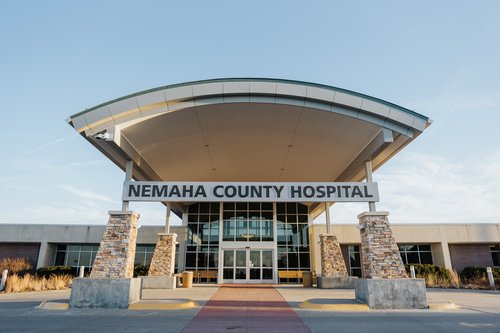
Nemaha County Hospital is a small, critical access hospital located in the quiet corner of southeast Nebraska. Here, Maxcey Smith, MHA, BSN, RN, CPHQ, a quality director and mother, has become an unexpected champion for Pediatric Readiness. Smith, who has worked in rural health care for 20 years—15 at the bedside and 5 in quality and safety—understands the responsibility that comes with working in the same emergency room her own family depends on. “I’ve brought my kids to this ER myself,” she says. “I want to know, for them—for my friends’ kids, for every child here—that they’re receiving safe, high-quality care from staff who are truly Pediatric Ready.”
Starting Small, Thinking Big
The hospital’s emergency department is small. Pediatric cases are low volume, with highly emergent cases even fewer. The addition of PALS certified staff, and the work of Smith in quality, have turned pediatric treatments into a strength. Smith enrolled Nemaha County Hospital in the National Pediatric Readiness Quality Initiative (NPRQI), realizing that low volume meant she could audit every pediatric chart with exceptional accuracy. She entered each case into the NPRQI dashboard, ran performance reports, and brought the results straight to leadership and the board.
“It’s easy to enter, it’s free, and it provides incredible feedback,” Smith explains. “NPRQI lets us see how we compare to similar hospitals and to national performance.”
Her work had unexpected reach: despite being one of the smallest participating facilities in Nebraska, her hospital contributed more than half of the state’s total pediatric charts to the national database.
“Honestly, I didn’t think we could contribute much,” she says. “But it turns out our little hospital is making a real national impact.”
One of the biggest successes has been giving staff tangible, data-driven feedback, something they rarely receive in rural EDs with infrequent pediatric cases. “It’s eye-opening for them to see their performance,” Smith says. “It makes them feel confident. They can see that the care they’re providing really is high quality.”
Leadership Support, Shared Responsibilities
Unlike many larger EDs, Nemaha County Hospital doesn’t yet have a designated pediatric champion. But they approach the responsibilities of one together.
“At this time, we don’t have a single staff member with the official title of pediatric champion,” Smith explains. “Our administration is a big driver of the effort, and I take on the chart audits, performance reviews, and staff education. It’s a team effort.”
The hospital’s CEO, Marty Fattig, was the first to push for participation after hearing about the initiative at a national conference. Smith credits his vision. “He has a deep understanding of quality care,” she says. “He knew Pediatric Readiness would elevate the care we provide.”
A Journey, Not a Destination
Pediatric Readiness, for Nemaha County Hospital, isn’t a one-and-done effort. It’s an ongoing cycle of assessment, improvement, and learning. They participated in the National Pediatric Readiness Project Assessment previously and plan to complete it again. They’re also preparing to use Pediatric Readiness checklists and supply guides to shore up resources that are harder to obtain in a rural setting.
“The work doesn’t stop,” Smith says. “There are so many tools out there, and NPRQI is just one part of it.”
Advice for Other Rural EDs
Smith’s guidance to small hospitals is simple, compelling, and delivered with the clarity of someone who has lived the challenge:
“This initiative is self-driven and it’s free. If safe, quality care is a priority for your organization, then participating should be a no-brainer.”
Pediatric emergencies might be rare in the community, but they can be life and death. The National Pediatric Readiness Project has helped Nemaha County Hospital reach its true potential. Smith has shown what’s possible when dedicated facilities have the right tools and data available, demonstrating that size is no barrier.
In fact, sometimes the smallest hospitals make the biggest difference.