
Practical Tips for Your NPRP Gap Report
- 5 minutes

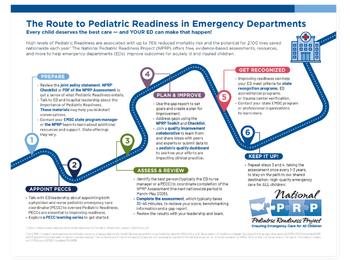
This section helps ED teams understand and use the National Pediatric Readiness Project (NPRP) Assessment to evaluate their current readiness, track progress, and guide improvement efforts.
Why It Matters: A clear understanding of current Pediatric Readiness allows EDs to identify strengths, uncover gaps, and prioritize actions based on data rather than assumptions.
Key Focus Areas: NPRP Assessment overview, readiness scoring, roles and responsibilities, result interpretation, gap reports, and benchmarking against state and national data.
Who to Engage: Pediatric Emergency Care Coordinators (PECCs), ED leadership, quality and patient safety teams, data or analytics staff, and key clinical stakeholders involved in pediatric care.
Getting Started: Key resources are labelled “Pinned.” These are considered foundational. Start with them first.
Step-by-step guide for using your NPRP Gap Report to strengthen Pediatric Readiness. Helps prioritize gaps, track progress, and guide safer care for children.
This resource highlights the three factors most strongly associated with higher Pediatric Readiness scores and based on findings from the 2021 National Pediatric Readiness Project (NPRP) Nationwide Assessment.
The National Pediatric Readiness Project (NPRP) Assessment is the primary tool used to understand and improve how emergency departments (EDs) across the United States are prepared to care for children. NPRP offers two ways to participate in the assessment:
Access the National Pediatric Readiness Project (NPRP) Assessment to evaluate your ED’s readiness to care for children, identify gaps, and guide improvements. Includes Nationwide and Open Assessment options.